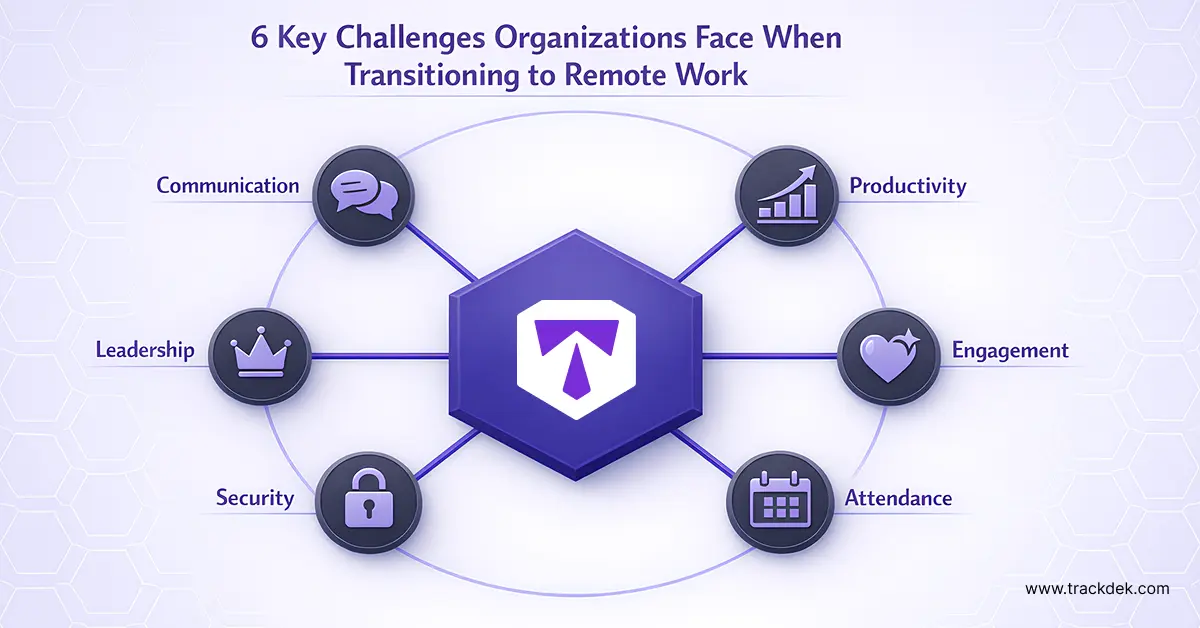
The shift to remote work has transformed how organizations operate. While it offers flexibility, access to global talent, and cost savings, transitioning from a traditional office setup to a remote work model is not without its challenges. Many organizations struggle to maintain productivity, collaboration, and visibility once teams go fully or partially remote.
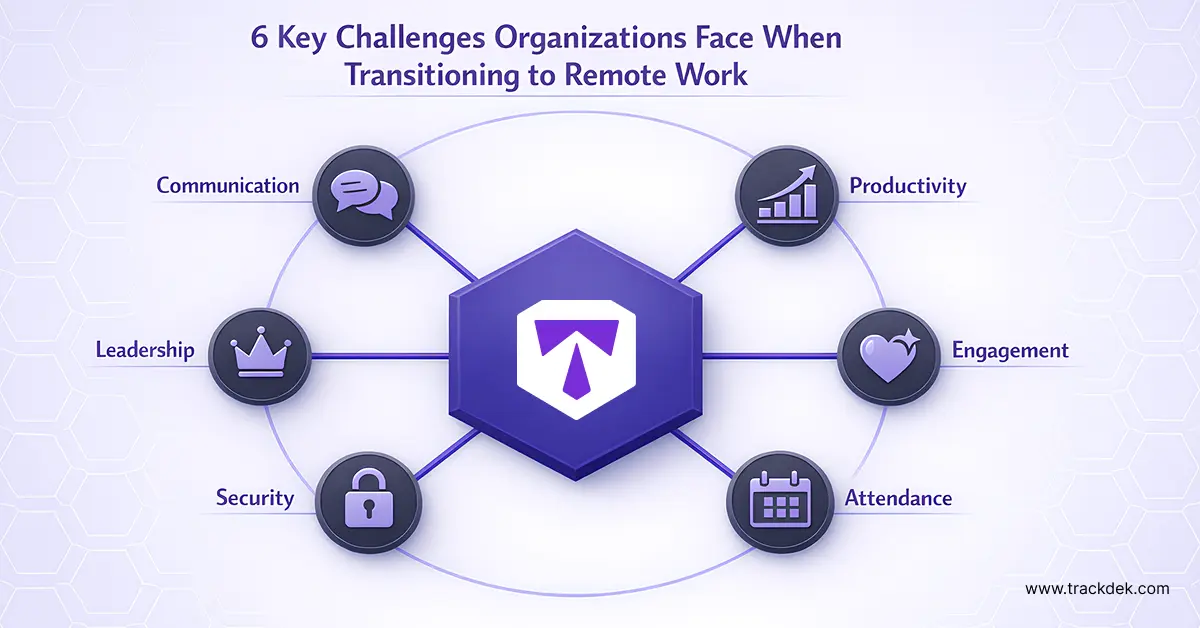
In this blog, we explore the six key challenges organizations face when transitioning to remote work and what leaders can do to address them effectively.
1. Communication Gaps and Collaboration Issues
In an office environment, communication happens naturally through quick desk conversations, team meetings, or impromptu discussions. Remote work removes these touchpoints, often leading to miscommunication, delays, and misunderstandings.
Without clear communication frameworks, teams may feel disconnected, leading to reduced collaboration and slower decision-making.
How organizations can address this:
-
Establish clear communication channels and guidelines
-
Encourage regular check-ins and structured meetings
-
Use collaboration tools consistently across teams
2. Maintaining Productivity and Accountability
One of the most common concerns for organizations transitioning to remote work is productivity. Without physical supervision, managers often find it difficult to understand how work hours are being utilized and whether goals are being met.
This lack of visibility can create trust issues and inconsistent performance tracking.
Solution approach:
-
Focus on outcomes rather than hours worked
-
Implement transparent productivity and time-tracking systems
-
Set clear expectations and measurable goals
3. Managing Employee Engagement and Motivation
Remote employees can sometimes feel isolated, disconnected, or overlooked—especially in long-term remote setups. This can impact morale, motivation, and overall engagement.
Over time, disengaged employees may experience burnout or reduced job satisfaction.
How to overcome this challenge:
-
Promote a strong remote work culture
-
Encourage recognition and feedback
-
Support work-life balance and mental well-being
4. Tracking Work Hours and Attendance
In a remote setup, tracking attendance and work hours manually becomes inefficient and inaccurate. Organizations may struggle with inconsistent reporting, payroll discrepancies, and compliance issues.
Without a reliable system, it becomes difficult to manage workforce operations at scale.
What helps:
-
Automated time and attendance tracking
-
Centralized reporting for teams and projects
-
Clear policies for remote attendance and availability
5. Ensuring Data Security and Privacy
Remote work increases the risk of data breaches and security vulnerabilities. Employees accessing company systems from different locations and devices can expose sensitive information if proper safeguards are not in place.
Security concerns are especially critical for HR, finance, and client-facing teams.
Best practices include:
-
Secure access controls and monitoring
-
Clear data privacy policies
-
Using trusted tools that prioritize ethical and secure tracking
6. Adapting Management and Leadership Styles
Managing remote teams requires a shift in leadership mindset. Traditional micromanagement approaches are ineffective in remote environments and can damage trust.
Leaders must learn to manage through trust, transparency, and data-driven insights rather than constant supervision.
Successful leaders focus on:
-
Empowering employees
-
Using performance insights instead of assumptions
-
Building trust through transparency
How the Right Tools Can Make the Transition Easier
To overcome these challenges, organizations need tools designed specifically for remote and hybrid work environments. Platforms like TrackDek help businesses gain visibility into productivity, attendance, and workload without invasive monitoring.
By combining time tracking, productivity insights, and reporting in one system, organizations can manage remote teams more effectively while maintaining trust and transparency.
Final Thoughts
Transitioning to remote work is more than a logistical change; it’s an organizational transformation. While challenges around communication, productivity, engagement, and security are common, they can be addressed with the right strategies and tools.
Organizations that proactively adapt their processes, leadership styles, and technology are better positioned to thrive in a remote-first future.