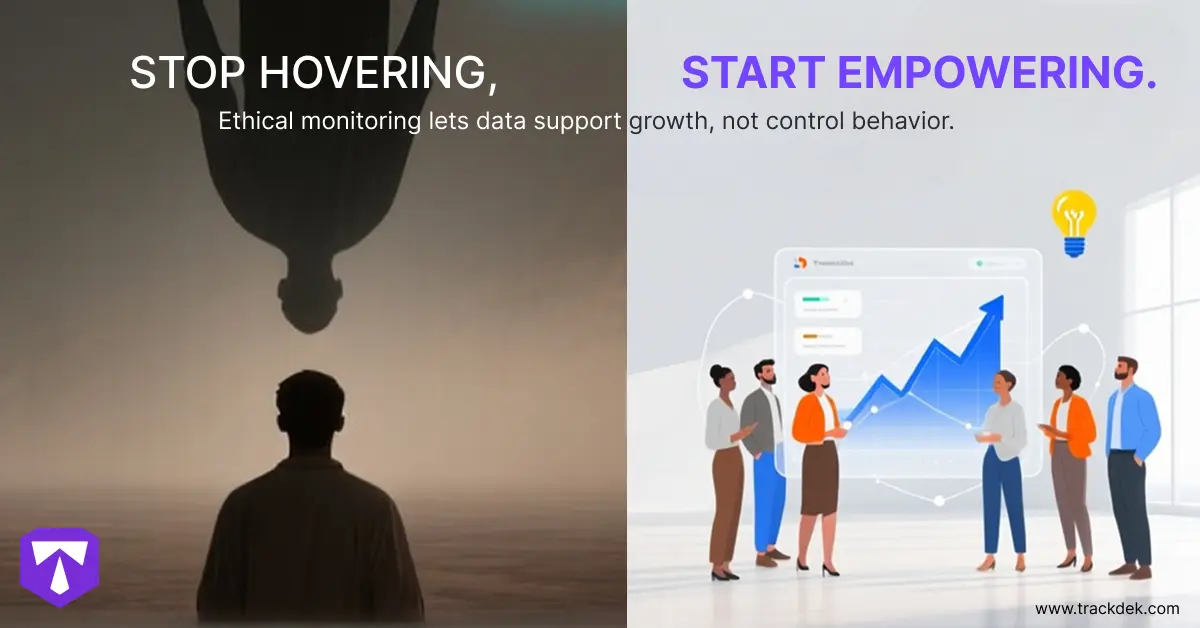
The difference is in application. With appropriate and ethical monitoring, it can serve as a positive work-tracking application for transparency and support, build a culture of trust, and have the potential to enhance productivity; however, when leveraged or implemented incorrectly, it can be demoralizing and may cause top talent to leave organizations.
Navigating this distinction is a key consideration for the future of the contemporary workplace.
The Difference: Monitoring vs. Micromanaging
Monitoring (Empowering)
- Supervision aims to achieve outcomes, advance projects, and maximize time.
- Goal: To provide objective information for a fair allocation of resources and to coach people on improvements.
- Communication: Transparent. Employees know what is being measured and tracked, and any data collected is communicated.
- Use of Data: Used to identify bottlenecks and support improvements.
Micromanaging (Controlling)
- Micromanaging measures activities on a minute-by-minute basis, processes keystrokes, and continuously interrupts.
- Goal: To demand strict compliance with the process, with threats of punishment at the slightest deviation.
- Communication: Secretive or punitive. Measured behavior is used as a disguise for threatening behavior.
- Use of Data: Data is used to criticize someone, especially if there may have been a time when activity was low.
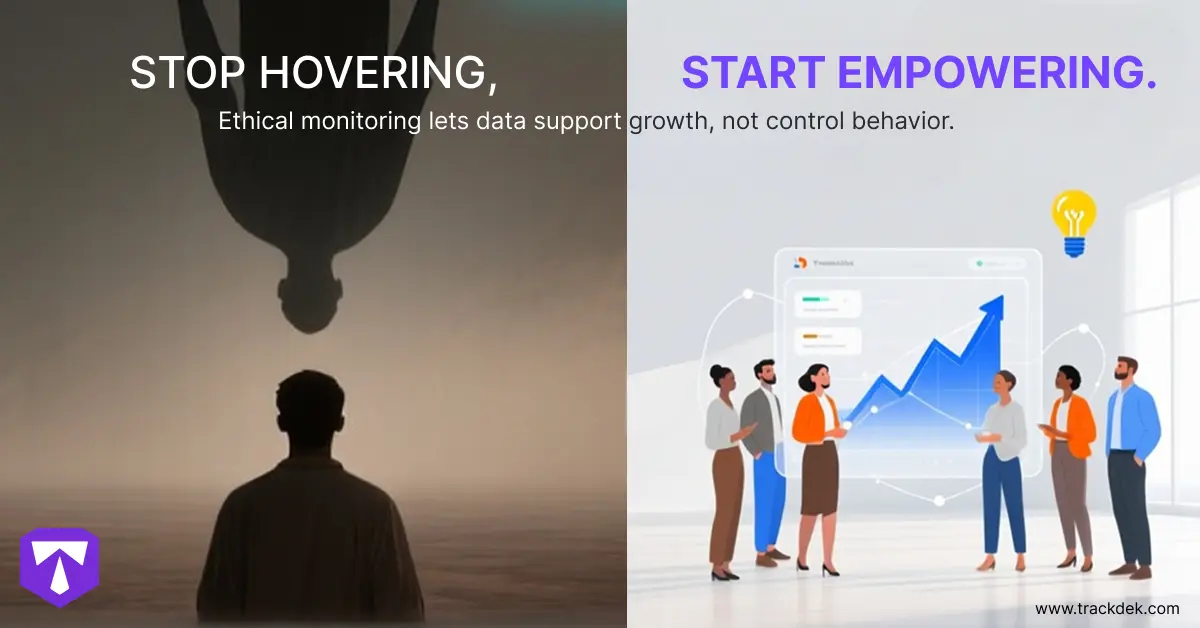
How Ethical Tracking Builds Trust and Productivity
Smart tracking solutions should be seen as a success enhancement tool and not as a means to punish. If organizations follow best practices for employee tracking, they can approach the process with a sense of ethics and empowerment.
1. Create Total Transparency in the Workplace
Trust is the currency of a contemporary and efficient team, and confidence and transparency start with discussing your employee monitoring software.
- Be explicit about the "Why": State that tracking is used for accurate payroll, substantiating fair client billing, and distributing the workload of employees. Encourage the employee to think of tracking as a benefit to them, as well as the employer.
- Be explicit about the "what": Note specifically what data is being tracked and, just as importantly, what is not being tracked. It's non-negotiable to mention what portion of the employees' privacy is being protected while at work.
- Transparency: Ensure that employees have access to their documented tracked data and a user-friendly way to consistently view and track this data. This self-serve visibility will encourage self-discipline and reinforce that the employee is being fairly tracked.
2. Focus on Context, Not Constant Surveillance
Transitioning from micromanagement to conscious observation requires the capacity to analyze the data thoughtfully, instead of being reactionary.
- Outcome Measurement: In other words, measuring time commitment against projects, project goals, and the final product. This honors the intention of the work and recognizes outcomes, not merely busyness.
- Use Nonpunitive Metrics: Utilize software tracking, such as project management software that can provide scores or logs over time, and avoid continuous scorekeeping related to work, such as a keystroke tracker. This provides the manager with context while still respecting the line of using non-secret, creepy surveillance.
- Honor Downtime: Use data to ensure the employees do not rub off on you as well; in relation to time tracking, managers should use information to see if the staff is working towards the start, middle, or end of burnout and suggest a coach for employees to a healthy work-life balance.
3. Use Data for Coaching, Not Criticism
Leveraging digital trace data for developmental purposes maximizes the potential of productivity tools.
- Targeted Coaching: When the data suggests an individual is spending too much time in non-work applications, approach it as a chance to coach. An example would be asking them, "What can we do to structure your day to allow you to focus?" rather than, "What were you doing on X website?"
- Fair Work Balance: Use the data to identify individuals who are consistently overworked. Using the system proactively to get ahead of burnout is one of the most powerful and ethical usages of monitoring tools.
- Recognizing Efficiency: Use the data collected from employees who produced high-quality work at a faster pace to acknowledge their hard work and efficiency. Value this information to reinforce that it is precisely the goal of the monitoring system.
The Future of Responsible Employee Monitoring
In this hybrid world, modern workplace monitoring is essential to the effectiveness of the business. When used in a transparent, supportive, and data-driven manner, it elevates the entire team. It enables management to relinquish control and empower employees to take responsibility for their productivity.
Use smart tracking tools that embed and empower, and not control, the employee. This is a cornerstone of high performance and long-lasting trust.